

Why CRM software is indispensable for small businesses
In today's digital world, structured and efficient customer relationship management is essential for securing long-term success. For small businesses in particular, which often work with limited resources, a well-chosen customer relationship management software can make all the difference. But which CRM solution is best suited to small companies? Which functions are essential, and what should you look for when choosing?
What is a CRM system and why does it matter so much?
A CRM system for small companies is more than a simple customer database. It helps manage emails, marketing campaigns, dashboards, sales processes and the entire customer journey. It also allows close integration with existing systems, so that data can be used seamlessly across different applications.
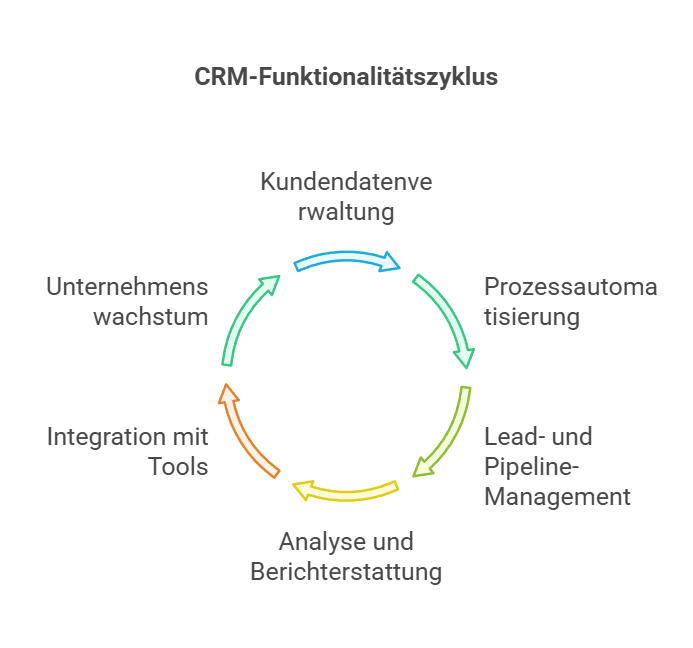
The core functions of a CRM system:
- Customer data management: storing and managing contact details, notes and histories.
- Process automation: reducing manual work through automation in sales, marketing and support.
- Lead and pipeline management: structured follow-up of more leads and closed deals.
- Analysis and reporting: real-time dashboards for measuring and improving performance.
- Integration with other tools: connections to email programs, accounting tools and online shops.
- Letting companies grow: scalability, so that the CRM for small companies can grow with the business.
- Improving customer service: building stronger customer loyalty through automated workflows and individual support.
How AI and ChatGPT are transforming modern CRM systems
With the growing integration of artificial intelligence (AI) and ChatGPT and its alternatives into modern CRM systems for small companies, entirely new possibilities for automation and customer interaction are opening up.
1. Automated customer communication
Using AI-based chatbots, CRM systems can answer customer enquiries in real time. ChatGPT enables even more natural and personalised customer interaction by generating intelligent answers to common questions and processing customer concerns efficiently.
2. Better lead qualification
AI-supported algorithms analyse and rate potential customers based on their behaviour, their interaction with the company and historical data. This helps convert more leads into paying customers and improves the sales process.
3. Predictive analysis for better business decisions
CRM systems with AI-supported dashboards can make precise predictions about future sales trends and customer needs. Companies can therefore plan better and create more targeted marketing campaigns.
4. Personalised recommendations and customer support
By analysing customer data, AI suggests products or services tailored to the individual. ChatGPT can deliver personalised answers in real time and give customers exactly the information they need.
5. Automation of internal processes
AI makes it possible to automate recurring tasks such as sorting emails, creating sales reports or scheduling follow-ups. This increases productivity and allows staff to concentrate on strategically more important work. Integrating AI and ChatGPT into CRM systems is not merely a trend but a necessity for staying competitive in today's business world. CRM for small businesses benefits particularly strongly from this intelligent automation, because it reduces the workload considerably and improves customer loyalty.
The advantages of a CRM system for small companies
1. More efficient processes and time saved
Without CRM software, many processes have to be carried out manually. That takes more time and is prone to error. A good CRM solution automates routine tasks and gives business owners more time for work that creates value.
2. Better customer communication
Because customer data are stored centrally, staff have access to relevant information at any time. That improves communication and allows customers to be addressed personally.
3. Improved sales processes
Structured lead management helps address potential customers in a targeted way and improves the sales process. A CRM system for small businesses allows follow-ups to be automated, so that no sales opportunity goes unused.
4. Scalability for growing companies
Even though small businesses start small, they often grow quickly. A CRM solution can be scaled without difficulty to meet rising demands. 1Tool deserves particular mention here for its modular structure.
5. Greater productivity through automation
CRM tools offer various automation functions that are particularly suitable for start-ups and small companies. Recurring tasks such as sending emails, recording customer data or following up marketing campaigns are automated by CRM systems, so the team can concentrate on what matters.
6. Better decisions through dashboards and reports
CRM systems such as Microsoft Dynamics 365 or 1Tool offer extensive dashboards that let companies make decisions based on data. These reports help measure the success of marketing campaigns, sales processes and customer interactions more accurately.
Implementing a CRM system successfully
1. Carry out a needs analysis
Companies first have to define their specific requirements. Which functions are needed? Should the CRM system be integrated into existing programs?
2. Choose the right CRM software
The best CRM systems for small companies include Microsoft Dynamics 365, HubSpot CRM and 1Tool. The choice should be based on the functions required and on the budget.
3. Staff training and rollout
Implementing a CRM system can only succeed if all staff use it properly. Training and onboarding are essential for realising its full potential.
4. Using existing systems and tools
The best CRM for small companies integrates easily into existing systems, allowing data to be managed consistently.
5. Regular review and adjustment
CRM systems offer numerous options for customisation. Companies should check regularly whether the chosen system still fits their needs and make adjustments where necessary.
Conclusion: CRM software offers small businesses excellent opportunities
A well-chosen CRM system for small companies helps manage customer relationships more efficiently, increase revenue and secure long-term growth. With the right CRM tools for small businesses, even medium-sized companies and start-ups can keep up with large competitors. By using a CRM solution tailored to small companies, businesses benefit from streamlined workflows, better customer communication and a clearer sales strategy. Many CRM systems also offer the option of testing them free of charge before making a final decision. written by Michael Jagersbacher Related articles: Software for GPS tracking of employeesProject planning tool software