
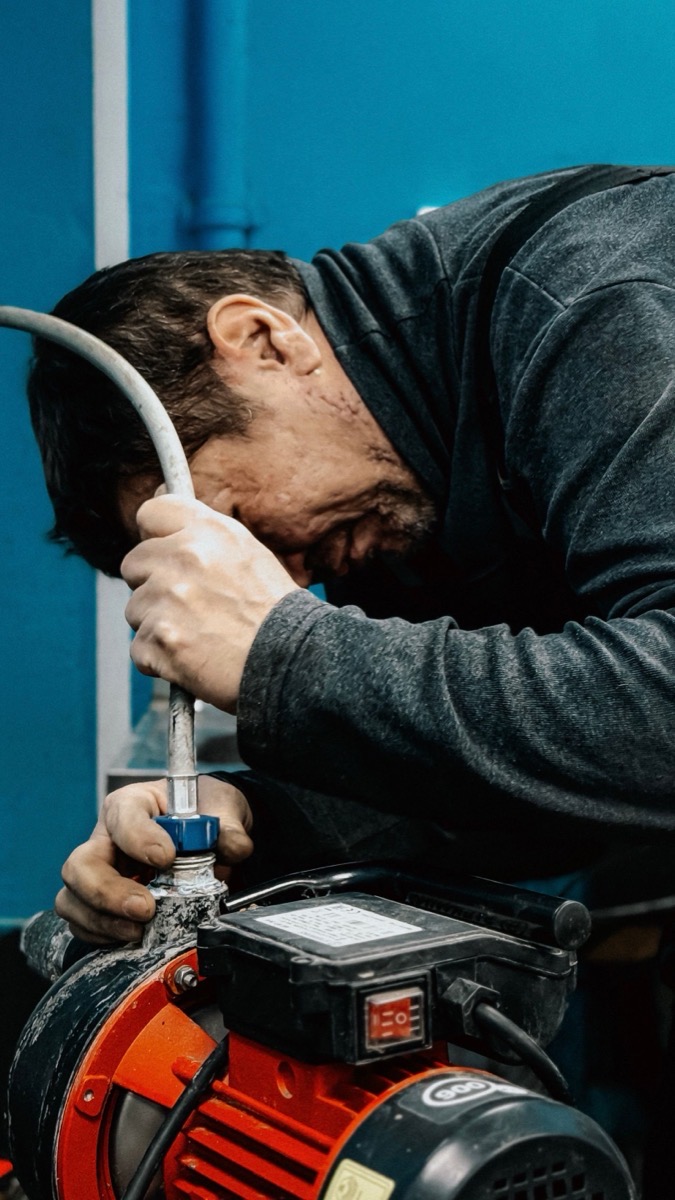
Leak detection, drying and damage restoration are a field service business with very specific requirements: appointments are often emergencies, documentation determines how the insurance claim is handled, and the report usually has to be finished right at the site – not back at the office in the evening. A real requirements specification for such an industry solution based on 1Tool is a good way to show how much detailed work goes into a solution that truly works in day-to-day operations.
Why standard software often reaches its limits here
Leak detection and restoration companies juggle several parties at once: the client, the policyholder, the insurer and often an additional claims handler – each with their own expectations regarding communication and evidence. On top of that comes time pressure: water damage does not wait until the next working day. Generic tradesman software covers day-to-day business but often fails on the industry-specific details – and that is exactly the gap a good specification addresses in concrete terms.
From the call to the invoice: the end-to-end process
- Enquiry: Damage report forms and emails go through a ticket system instead of getting lost in a shared inbox, and are automatically assigned to the right team based on postcode and customer data.
- Scheduling: The system automatically suggests available measurement technicians – based on qualification, location and even star rating – instead of someone matching calendars and skills by hand.
- On site: The complete report, including photos, measurements and installed drying equipment, is created directly in the app, even offline.
- Billing: The invoice is generated automatically from the schedule of services – including surcharges for emergency, weekend or public holiday call-outs.
AI-assisted report checks right at the site
One of the most interesting requirements in the specification: with AI support (e.g. ChatGPT), the app should check whether a report is complete and plausible – before the technician leaves the site. If a mandatory measurement is missing or an entry looks implausible, this is flagged immediately instead of only being noticed days later at the office and requiring a second trip.
The mobile report: more than just a PDF form
What a good field report in this industry really needs only becomes clear in the details:
- Photos and videos are assigned directly to the right category (room, floor, type of damage)
- Drawing tools allow damaged areas to be marked directly on the image (arrow, circle)
- Text templates speed up labelling without losing the option of free text
- The finished report is created entirely on the phone, compressed as a PDF and sent directly to the stored distribution list, including a “management summary”
- Everything also works without a network connection – the app synchronises automatically as soon as a connection is available again
Accounting without media breaks
With many small, time-critical jobs, billing determines the margin. From the specification: automated dunning proposal lists with escalation levels, SEPA direct debit including digital pre-notification, OCR recognition of incoming invoices with automatic cost centre assignment, as well as interfaces to DATEV and e-invoicing formats such as ZUGFeRD and XRechnung. None of this is a nice-to-have – these are the processes that genuinely eat up time in day-to-day business if they are not automated.
Customised, yet still standard software
What stands out about this specification: it does not describe a development from scratch, but the extension of an existing standard solution with industry-specific modules and adaptations. This is exactly where configurable software differs from purely custom development – more on this in our article 1Tool vs. custom development.
Frequently asked questions
Is an industry solution for leak detection/restoration also worthwhile for smaller companies?
Yes – most of the automations mentioned above (appointment suggestions, automatic invoicing logic, dunning) save a disproportionate amount of time, especially when staff resources are tight.
What happens if the app has no internet connection on site?
The report is saved locally and synchronised automatically as soon as a connection is available again – more on this in our article on offline-first field service apps.
How exactly is the automated technician routing calculated?
Based on availability, qualification, location and an internal rating – the system suggests suitable appointments, but final approval always remains with the team.
An overview of CRM, resource planning and accounting specifically for this industry can be found on our page Software for leak detection & water damage restoration.
Are you planning an industry solution for leak detection, drying or damage restoration? Talk to us about your specific requirements.
Book a demo appointment